Style distinctions3 min read
A sparkling red is not automatically a sweet red. Lambrusco offers a useful opportunity to separate color, sweetness and effervescence when reading a bottle or restaurant list. Start with the specific denomination and producer description rather than letting one familiar inexpensive bottle define the entire category.
Read the guide ↗
Style distinctions3 min read
Dried-grape descriptions can suggest sweetness even when the finished wine is described as dry. Compare Amarone and Recioto through the production stages they share and the outcome they do not. Keep the full names visible so a method term does not silently become a serving expectation.
Read the guide ↗
Style distinctions3 min read
Ripasso can be misread as a numerical mixture of two familiar wines. The useful starting point is the process described by the Valpolicella consortium. Learn what the term identifies, then leave unprovided percentages and bottle-specific flavor claims out of the explanation.
Read the guide ↗
Style distinctions3 min read
Port labels carry several layers of information, and a prominent number can distract from the broad style underneath it. Begin with the ruby or tawny family. IVDP's distinction helps organize the description without turning color, price or age into an automatic personal quality ranking.
Read the guide ↗
Bottle decisions3 min read
A year on a Port label can sit beside words that change what it means for the wine's category and maturation. Keep Vintage, Late Bottled Vintage and colheita separate before considering service or storage. The exercise is label interpretation, not a recommendation to buy older or more expensive bottles.
Read the guide ↗
Style distinctions3 min read
A regional wine name can contain several colors and maturation approaches. Banyuls is a useful example of why a sweet-wine category still needs more detail. Begin with the actual style stated on the bottle, then ask how that description connects with the serving you are considering.
Read the guide ↗
Style distinctions3 min read
Qvevri identifies a vessel and a living Georgian wine-making tradition. It does not by itself supply the grape, color or complete sensory profile of a bottle. Read the method with cultural context, then look for the actual producer's details rather than turning clay into a universal tasting adjective.
Read the guide ↗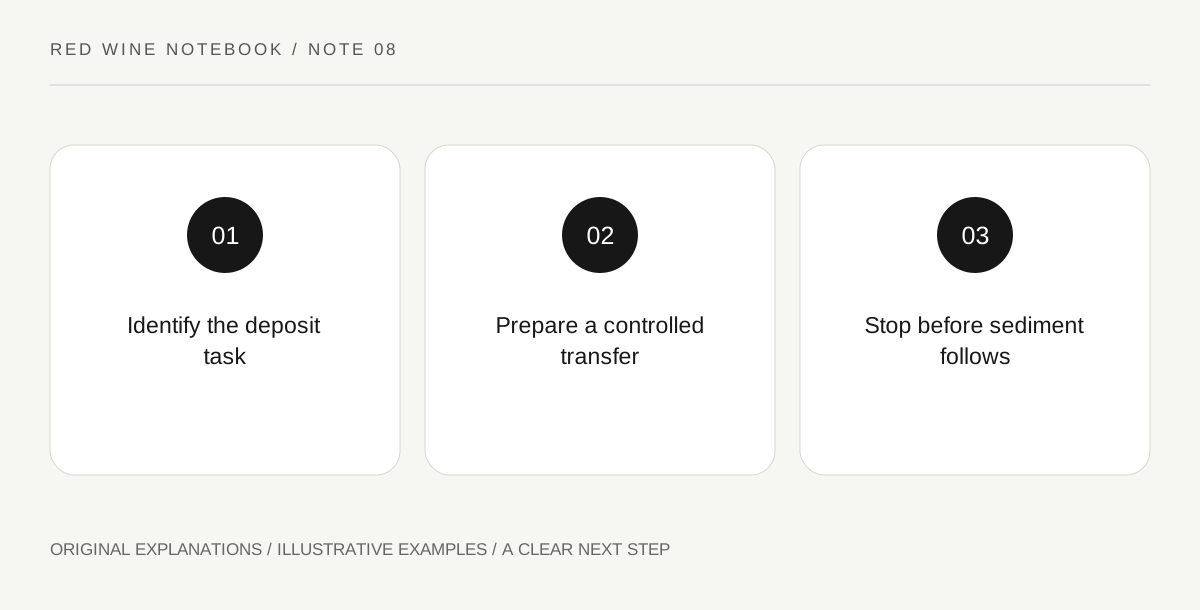
Serving notes3 min read
Sediment gives decanting a concrete purpose that is different from a vague promise to improve every red wine. Identify whether a deposit is present and use an appropriate service method if needed. The task is careful separation, with the producer's guidance and comfortable handling taking priority over ceremony.
Read the guide ↗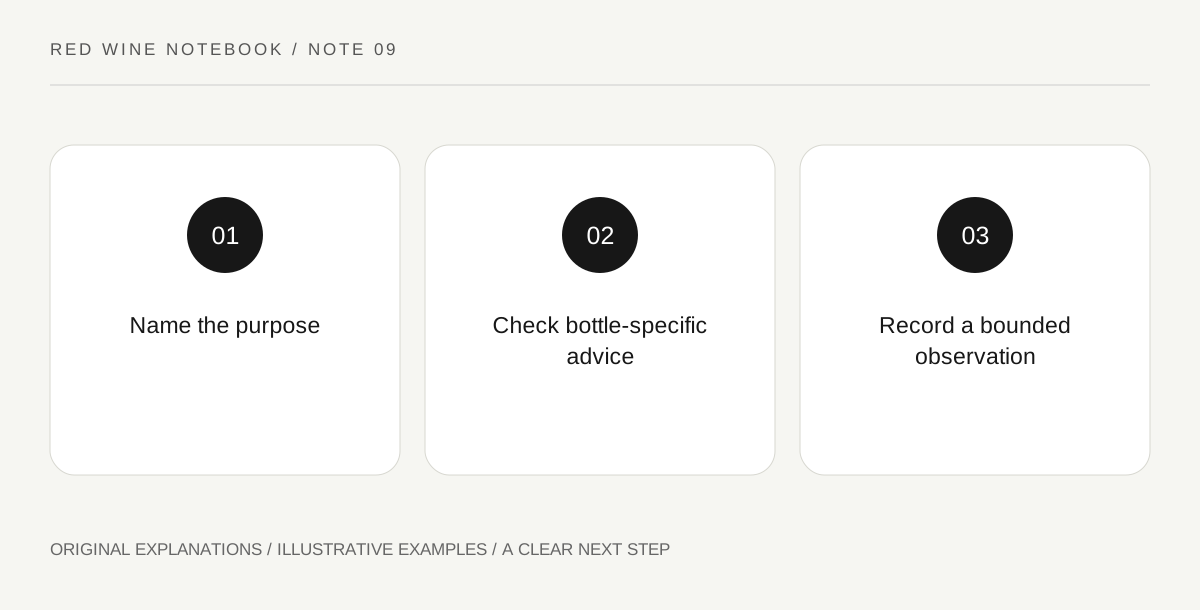
Serving notes3 min read
A fixed instruction to decant every red wine for an hour sounds convenient but ignores why the transfer is being made. Separate aeration from sediment removal and consult the actual bottle's guidance. A useful observation can remain modest without promising that more air always produces a better drink.
Read the guide ↗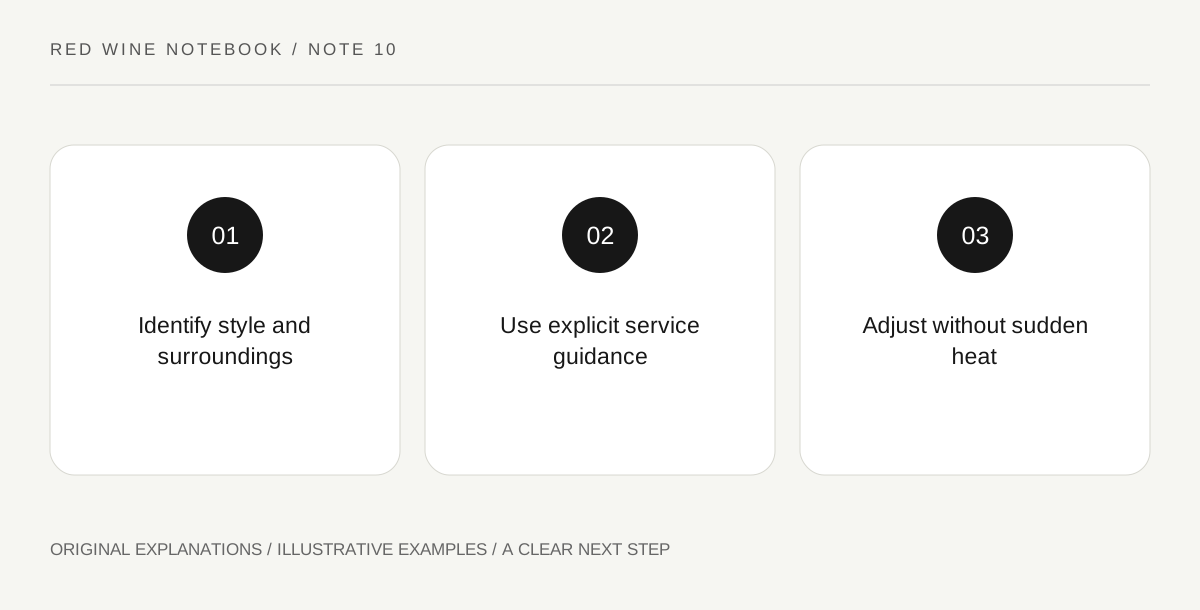
Serving notes3 min read
A heated kitchen and a cool dining room are both rooms, but they do not give a bottle the same serving condition. Replace a vague room-temperature instruction with the producer's style-specific guidance. Keep service temperature separate from long-term storage and avoid sudden heating as a shortcut.
Read the guide ↗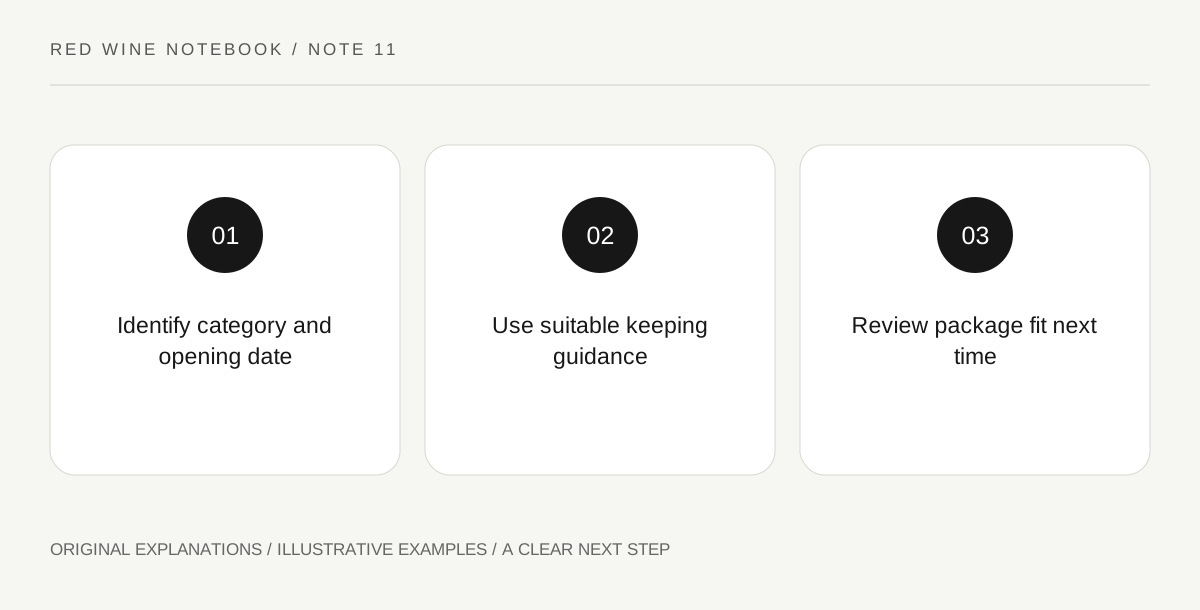
Serving notes3 min read
An opened bottle creates a storage question even when no one wants another serving. Plan the closure, location and record before opening. Different styles and products can have different guidance, so a neat rule about every red lasting the same number of days is not a reliable substitute.
Read the guide ↗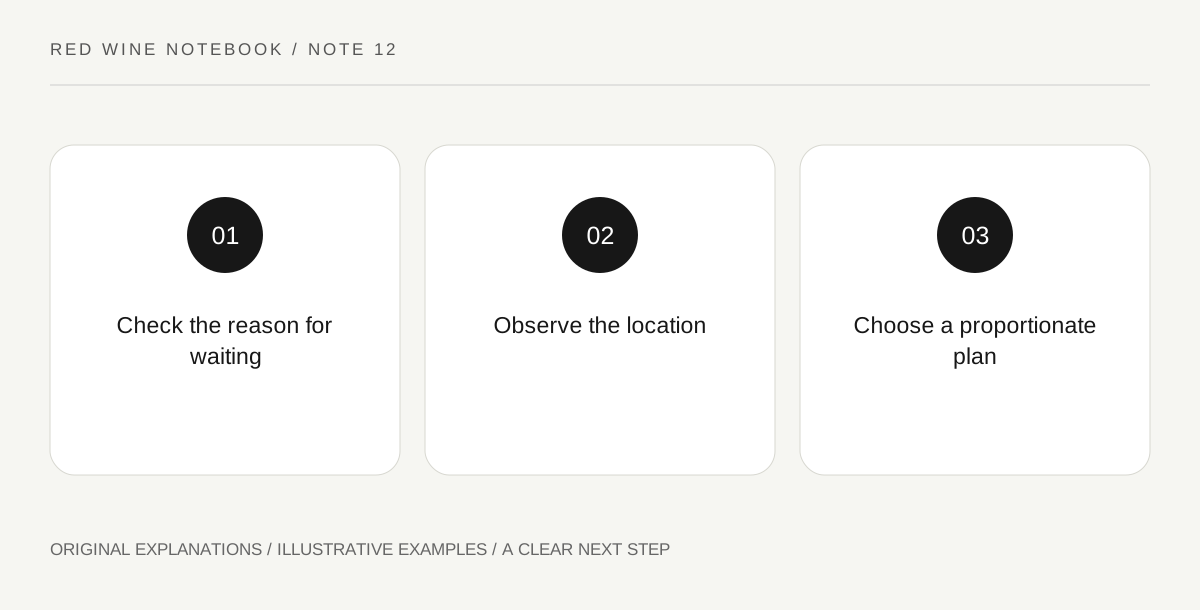
Bottle decisions3 min read
Long-term storage is a decision about both the wine and the place it will stay. Begin by asking whether the actual bottle is intended to develop further, then inspect the proposed location. A decorative rack can look convincing while sitting in unsuitable heat, light or daily disturbance.
Read the guide ↗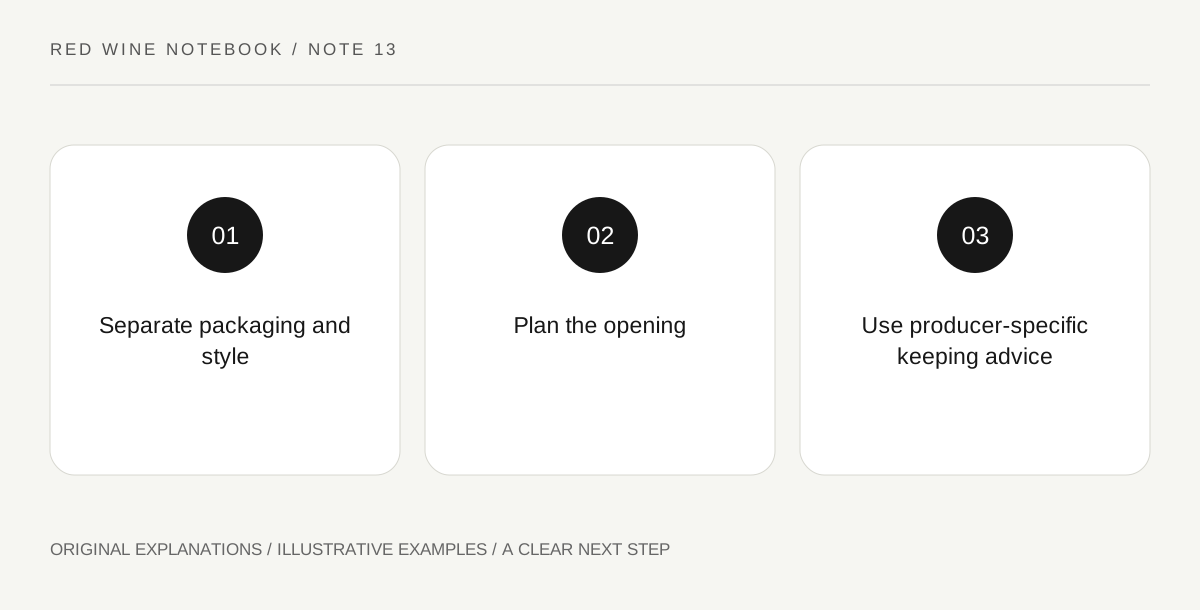
Bottle decisions3 min read
The sound of opening a bottle can carry strong expectations, but closure type alone does not rank red-wine quality. Read the actual wine and practical service requirements first. A useful choice considers opening, resealing and producer guidance without turning one closure into proof of sophistication.
Read the guide ↗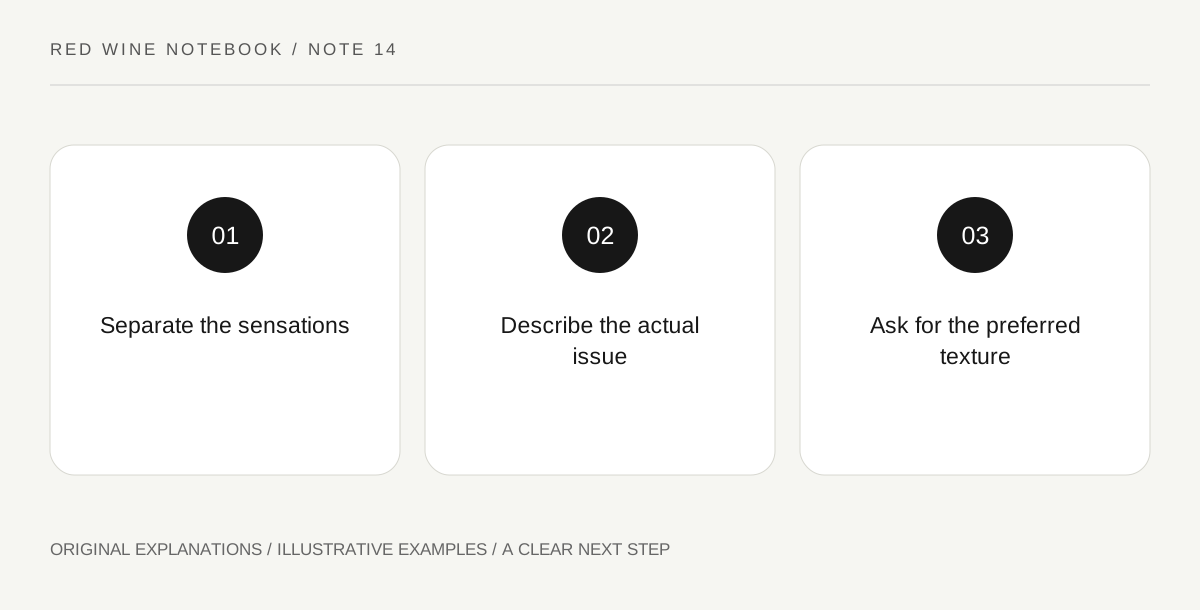
Taste vocabulary3 min read
A red wine can feel drying and mouthwatering in the same experience. Those words need not contradict each other. Separating tannin-related texture from acidity helps describe a preference more clearly, without forcing every unfamiliar sensation into the broad verdict that a wine is too dry.
Read the guide ↗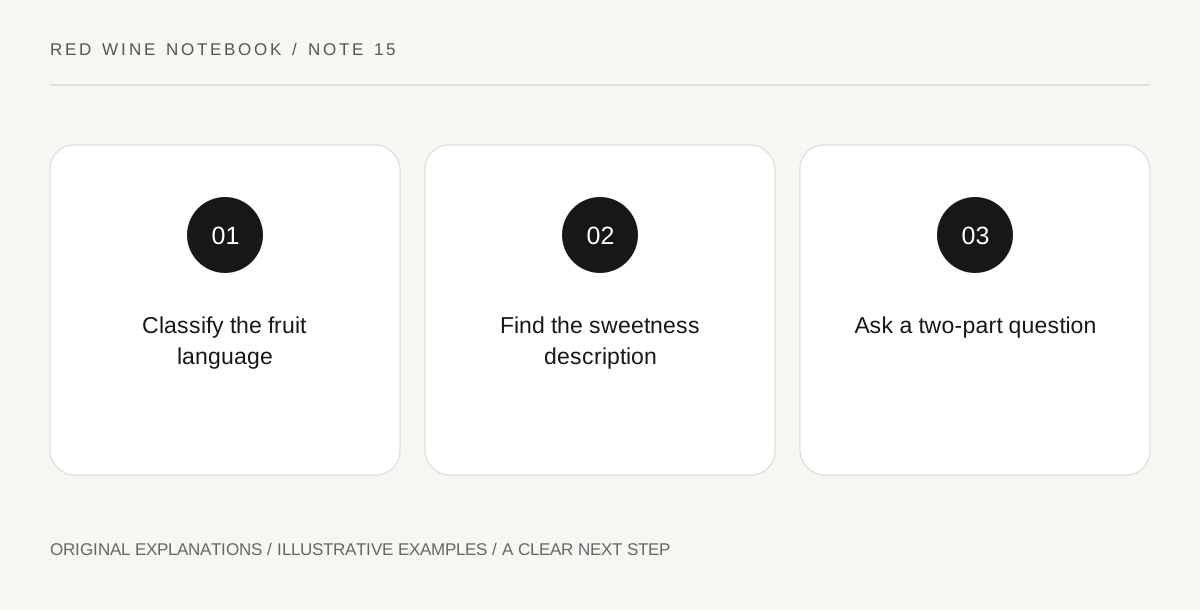
Taste vocabulary3 min read
Cherry, plum and berry language can make a red wine sound sugary even when its sweetness description says dry. Read aroma and sweetness as separate dimensions. That distinction supports a better shopping question without requiring precise laboratory values or pretending that everyone perceives the same balance.
Read the guide ↗
Bottle decisions3 min read
The alcohol-content statement supplies a different kind of information from tasting language. Read it as a concentration by volume, keeping bottle size and served amount separate. The exercise explains the label without turning a numerical statement into a health recommendation or assuming taste can verify it.
Read the guide ↗
Bottle decisions3 min read
A by-the-glass list can make wine selection simpler when its serving information is clear. Read the measure, exact wine and price together. A vague line with only a region or grape may need one short question before it becomes comparable with another option.
Read the guide ↗
Taste vocabulary3 min read
A dish called chicken, noodles or vegetables can carry very different sauces, seasoning and textures. If adults choose wine with it, begin with those components rather than a rigid red-with-meat rule. Keep personal preference central and make room for a different beverage without treating the pairing as a test.
Read the guide ↗
Bottle decisions3 min read
A thoughtful wine gift begins by knowing that the adult recipient actually welcomes alcohol and what style they enjoy. Then consider opening, timing and storage. A famous name or impressive bottle weight cannot answer those practical questions on the recipient's behalf.
Read the guide ↗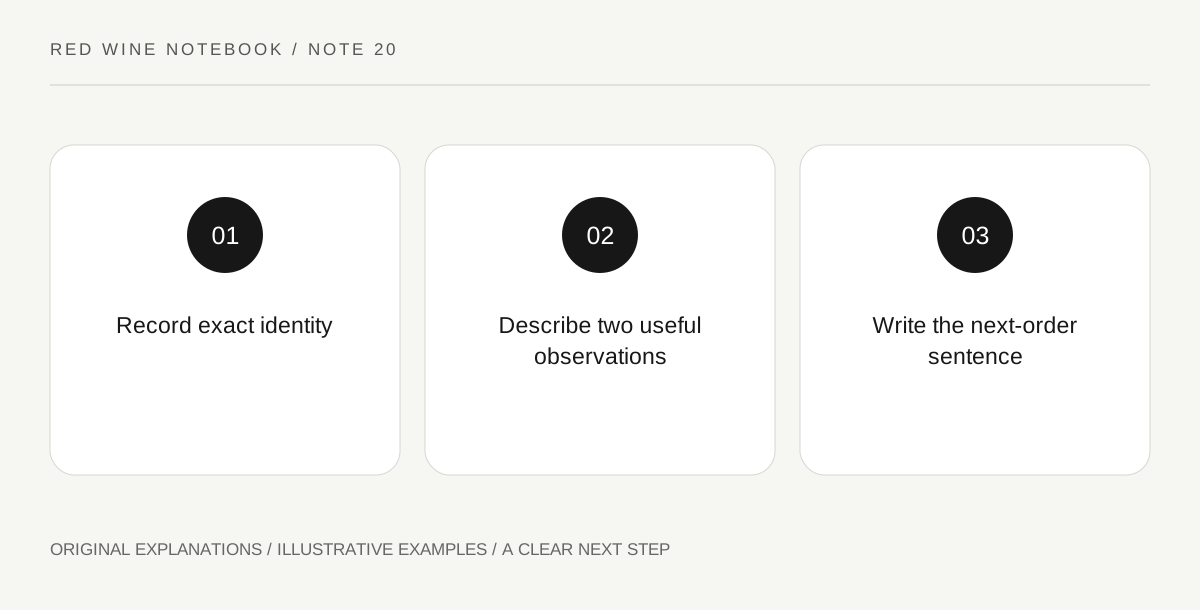
Taste vocabulary3 min read
A list of numerical ratings can be less useful than one clear sentence about what you enjoyed. Build a small preference note around identity, context and a specific observation. It should help with a later menu without requiring frequent tasting, specialist language or a public claim of expertise.
Read the guide ↗