Read a red-wine-by-the-glass line before comparing the prices
A by-the-glass list can make wine selection simpler when its serving information is clear. Read the measure, exact wine and price together. A vague line with only a region or grape may need one short question before it becomes comparable with another option.
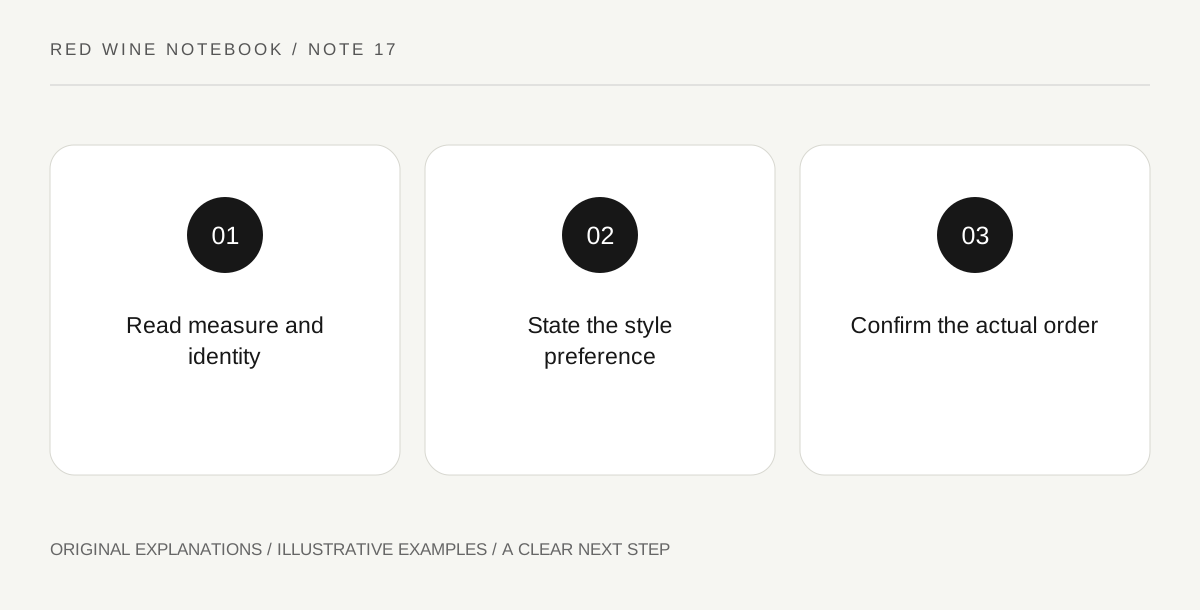
Original explanatory diagram. Read the full method and limitations below.
Locate the serving measure
WSET's service FAQ notes that common pours vary across venues and countries. Do not assume every price on a list buys an identical amount. Read the stated measure and ask if it is missing. A carafe, glass and small bottle are different formats. The comparison should begin with what is actually offered rather than translating every menu term into the size you remember from another restaurant.
Identify the actual wine
Look for producer, complete wine name and vintage where provided. Some lists abbreviate information, so ask which bottle is currently open if the identity matters. A house red label may be practical for the venue without telling you enough about style. State the relevant preference plainly: dry or perceptibly sweet, less drying texture or a lighter perceived body. The server can then connect it to the available wine instead of guessing from a prestige name.
Compare price without a volume trap
Use the actual measure to understand a price difference, but do not let a lower price per unit become a reason to order more than wanted. A bottle can be poor value for the occasion if the group does not want it. Include any clearly disclosed service or other applicable charges when assessing the bill, without inventing local rules. The useful purchase is the serving that fits the plan and budget, including a non-alcohol option where preferred.
Confirm before a substitution
If the listed wine is unavailable, ask for the replacement's identity, style, measure and price before agreeing. Another bottle from the same region is not automatically an equivalent experience. You can accept the suggested alternative, choose another listed drink or decline. Keep any later preference note tied to the wine actually served rather than the unavailable menu entry. This small confirmation prevents an inaccurate notebook and an avoidable surprise on the bill.
Illustrative worked example
Illustrative scenario: a menu lists one red at a higher glass price than another. Reading the measures shows they are different serving sizes, so the raw prices are not directly comparable. The diner chooses the desired smaller serving after asking about its style. When it is unavailable, they confirm the replacement and price before deciding, without treating a bottle order as the default solution.
Questions that come up
Is a bottle always better value than glasses?
Unit price is only one consideration. The desired amount, group preferences and occasion may make a smaller serving or no alcohol the more appropriate choice.
Does a regional name identify the exact glass?
Not necessarily. Ask for the actual producer or bottle when needed, especially if the list is abbreviated or a substitution is proposed.
References and scope
These sources support the factual background. Examples and exercises are original illustrative teaching material. References do not imply endorsement.
- WSET: Serving and Decanting FAQ — Serving and decanting considerations, including sediment separation and the limits of universal decanting rules.
- WSET: Finding a Wine You Like — Closure type alone does not rank wine quality; preferences, packaging and occasion inform choice.