Amarone and Recioto: shared dried-grape language does not mean shared sweetness
Dried-grape descriptions can suggest sweetness even when the finished wine is described as dry. Compare Amarone and Recioto through the production stages they share and the outcome they do not. Keep the full names visible so a method term does not silently become a serving expectation.
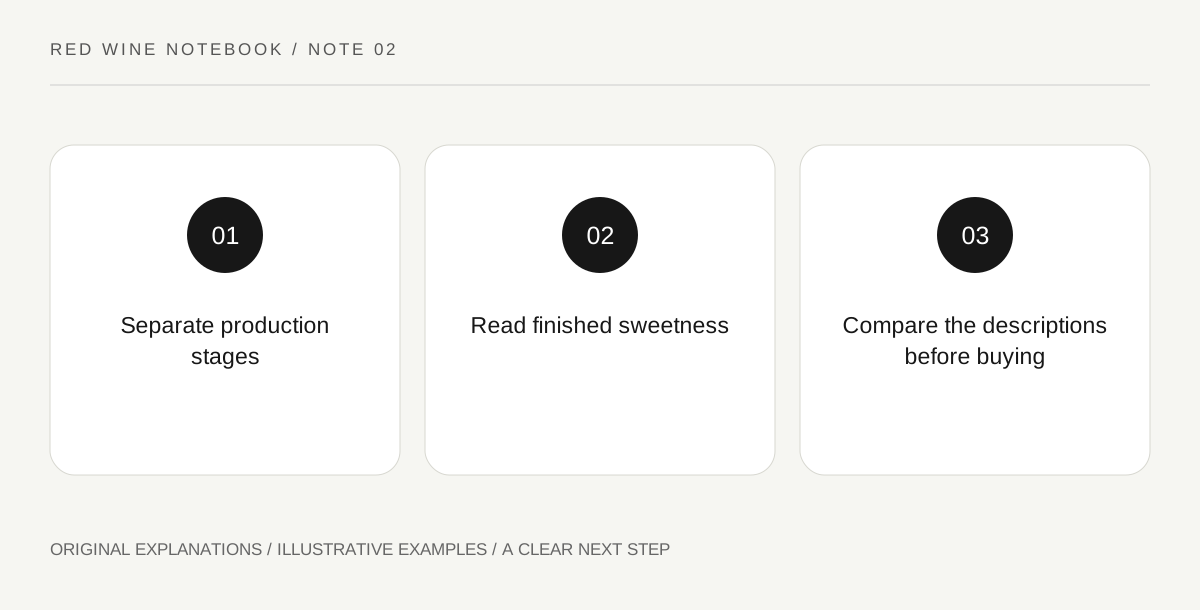
Original explanatory diagram. Read the full method and limitations below.
Put appassimento in the process column
The Valpolicella consortium describes grape drying as part of both Amarone and Recioto production. Appassimento concerns a stage before the finished wine. Record it separately from the final sweetness description. A dried-fruit aromatic comparison is another separate field again. Keeping stage, sensory language and finished style distinct prevents a persuasive story about concentrated grapes from becoming an unsupported claim that every wine made that way tastes sugary.
Read the finished style explicitly
The consortium describes Amarone as dry and Recioto as sweet, with fermentation handled differently to preserve the latter's sweetness. That distinction is enough to ask a useful retail or restaurant question without memorizing production thresholds. Copy the precise wine name and seek the producer's current description. Do not treat either name as a guarantee of how much you personally will like the bottle, or substitute one for the other in a gift because both mention dried grapes.
Keep alcohol and serving context visible
Read the actual alcohol-content statement and producer service advice rather than inferring them from sweetness. A rich impression does not quantify either alcohol or sugar. Decide whether the intended occasion calls for the wine at all, and choose an appropriate serving format without pressure to finish a bottle. An adult choosing a sweet style for a small dessert setting is asking a different question from someone choosing a dry red for a meal.
Use a paired paper exercise
Before buying anything, compare two actual producer descriptions on paper. Highlight the shared process words once, then underline the different finished-style information. Write one question left unresolved for each bottle, such as current service guidance or whether the shop has the exact vintage described. This exercise teaches the distinction without requiring a side-by-side drinking session. The result should be two accurately labeled options, not a claim that one is the upgraded version of the other.
Illustrative worked example
Illustrative scenario: a shopper wants a sweet red and notices dried-grape language on an Amarone description. Comparing the consortium's style distinction with a Recioto description reveals that the shared drying stage does not settle sweetness. The shopper asks about the appropriate actual bottle and serving before deciding. No purchase or tasting is necessary for the classification lesson itself.
Questions that come up
Does dried-fruit aroma prove the wine is sweet?
An aromatic resemblance and a sweetness description answer different questions. Use the producer's finished-style information rather than translating every fruit word into sugar.
Is Recioto simply Amarone with sugar added at the table?
That is not the distinction described by the consortium. Read the production and finished-style information instead of inventing a shortcut recipe from the names.
References and scope
These sources support the factual background. Examples and exercises are original illustrative teaching material. References do not imply endorsement.
- Valpolicella Consortium: Wines — The consortium distinguishes Valpolicella, Ripasso, Amarone and Recioto and describes appassimento and ripasso.