Qvevri: an earthenware vessel does not specify one red wine flavor
Qvevri identifies a vessel and a living Georgian wine-making tradition. It does not by itself supply the grape, color or complete sensory profile of a bottle. Read the method with cultural context, then look for the actual producer's details rather than turning clay into a universal tasting adjective.
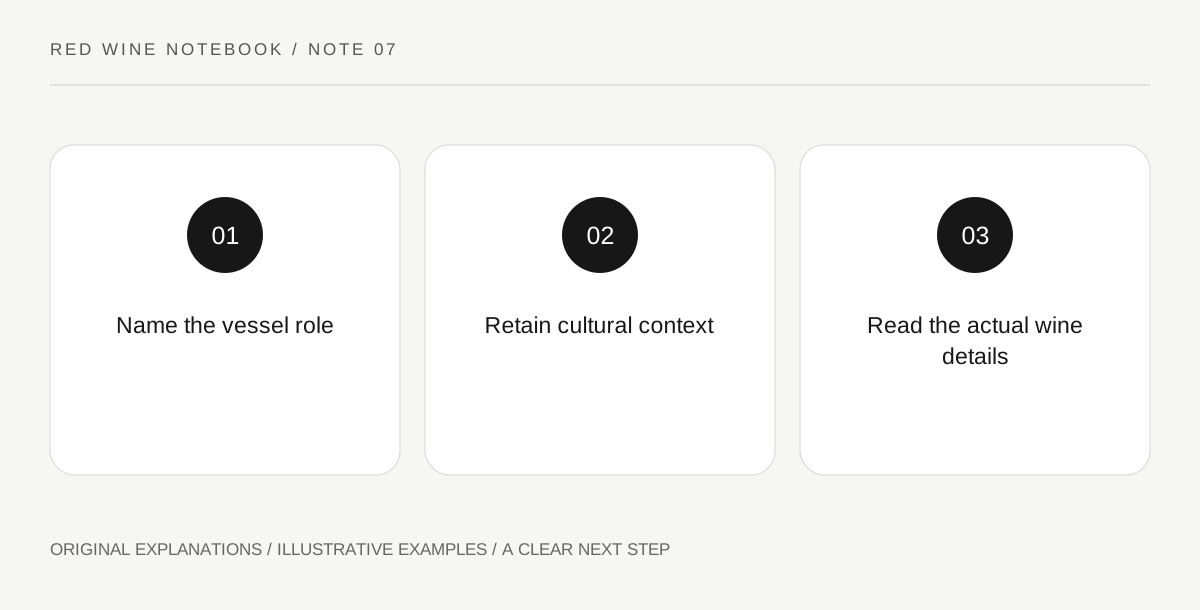
Original explanatory diagram. Read the full method and limitations below.
Identify what the vessel term establishes
UNESCO describes the qvevri as an earthenware vessel used in making, ageing and storing wine. Put that information in a method field. Keep grape identity, origin detail and color in separate fields where the bottle provides them. A red wine made with this vessel still needs its own explanation. Do not assume that a clay vessel must impart an earthy flavor or that every bottle using related language follows identical contact time and cellar practice.
Read the tradition beyond the object
UNESCO's account emphasizes knowledge passed through families and communities as well as the vessel itself. Treat that as context for respectful interest, not a marketing shortcut that makes every product ancient in the same way. Avoid repeating unsupported claims about one method being inherently healthier, purer or superior. A living practice can include variation. Ask the producer to explain its own work rather than making a general heritage description stand in for a bottle-specific technical sheet.
Keep color and contact questions open
A retailer may place qvevri wines near skin-contact whites, but the vessel term alone does not mean every wine belongs to that color category. Read the actual label and ask which grape material and production choices apply. This is particularly useful when seeking a red wine and encountering broad natural-wine shelf language. Do not infer ingredients, filtration, sulfite status or alcohol level from the vessel name. Each is a separate claim requiring its own reliable information.
Build a clear producer question
Write the exact wine identity followed by one question: what role did the qvevri play in this wine? The answer may concern fermentation, maturation or another defined stage. Record only what is actually stated. An optional sensory note can follow later without pretending that one earthy or fruit-like impression proves the process. The useful learning outcome is a clear connection between the named method and the producer's explanation, with cultural context retained rather than reduced to an exotic label.
Illustrative worked example
Illustrative scenario: an adult shopper assumes a qvevri label means an orange-colored wine. The actual bottle is identified as red, and the retailer explains the vessel's role in that producer's process. The shopper records vessel, wine color and grape information in separate boxes. They learn a method distinction without claiming that the vessel guarantees one flavor or health property.
Questions that come up
Does qvevri mean a wine tastes of clay?
The vessel name does not establish one sensory outcome. Read the producer's process and keep your personal aroma observations separate from unverified causal claims.
Is every qvevri wine made by an identical recipe?
A broad heritage account is not a complete technical specification for every bottle. Ask about the actual producer and avoid filling gaps with assumptions.
References and scope
These sources support the factual background. Examples and exercises are original illustrative teaching material. References do not imply endorsement.
- UNESCO: Qvevri Wine-making — Qvevri identifies an earthenware vessel and Georgian cultural method, not one grape or compulsory color.