An opened red needs a next-use plan, not a universal shelf-life promise
An opened bottle creates a storage question even when no one wants another serving. Plan the closure, location and record before opening. Different styles and products can have different guidance, so a neat rule about every red lasting the same number of days is not a reliable substitute.
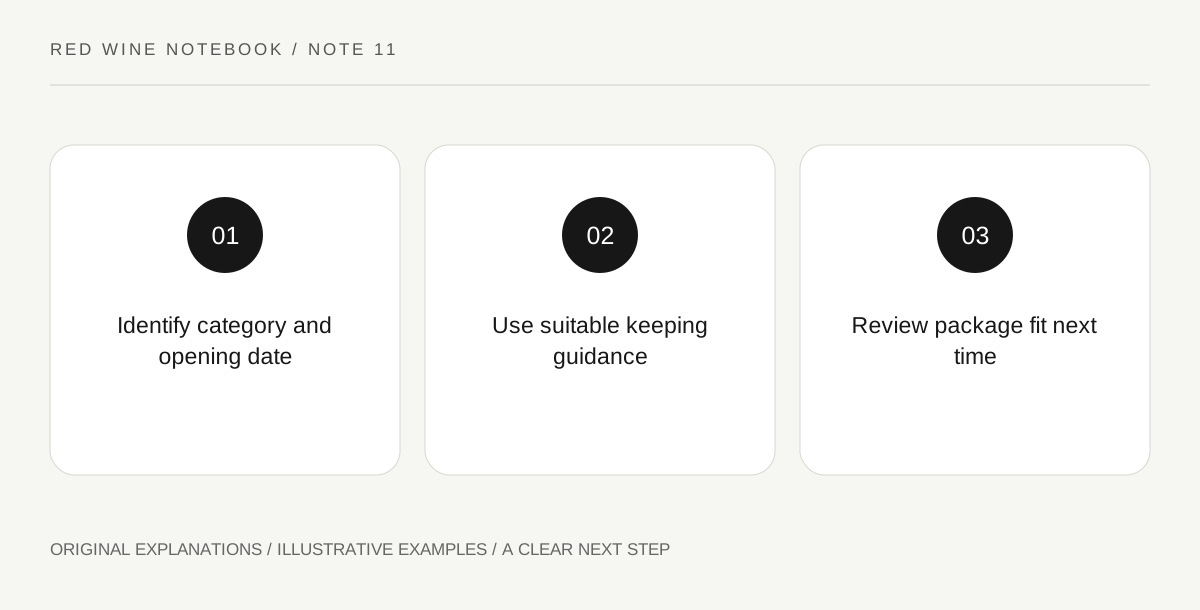
Original explanatory diagram. Read the full method and limitations below.
Find advice for the actual category
Read the producer's guidance and identify whether the wine is still, sparkling or fortified. Do not transfer an opening-life statement from one category to another. A retailer may provide useful bottle-specific information, but ask what the guidance refers to. Keep the actual wine identity and opening date together. That simple record prevents a later guess about which bottle was opened when, without pretending that a date alone establishes its condition.
Choose the closure and location beforehand
Use an appropriate supported closure and storage arrangement for the product. WSET's packaging discussion notes the practical convenience of resealing a screwcap and refrigerating a bottle for a later occasion. That example is not an indefinite preservation guarantee. A stopper's advertising should not silently override producer instructions. Keep the bottle protected from unnecessary heat and accidental spills, and make sure the storage arrangement is practical for the people sharing the household.
Separate serving temperature from keeping
A red may need an appropriate service adjustment after storage, but that does not mean it should sit in a warm room between uses. Read storage and service instructions as different tasks. Avoid rapid heating or using a radiator to make a refrigerated bottle ready. If the wine has sparkling pressure or another special handling requirement, preserve that guidance too. The goal is clear care through the interval, not maintaining the exact temperature at which the first glass happened to be served.
Allow the plan to end without more drinking
A purchase can be too large for the intended use even if the nominal cost per serving is attractive. Smaller available formats or choosing a glass in an appropriate venue may fit better next time. Do not turn an opened bottle into an obligation to finish it. If the product's condition becomes concerning or its handling history is unknown, seek appropriate advice or discard it rather than conducting a forced tasting to justify the original purchase.
Illustrative worked example
Illustrative scenario: two adults open a bottle for a meal and want no more afterward. They record its identity and date, follow the producer's closure and storage guidance and leave further drinking optional. Reviewing the occasion later, they decide a smaller available format would suit their household better. The lesson concerns planning and package fit rather than a claimed universal number of safe storage days.
Questions that come up
Does a vacuum stopper guarantee freshness for weeks?
Use the actual product and wine guidance. An accessory claim does not establish the condition of every wine or erase the effects of storage history.
Should I keep a red warm because it is served that way?
Service and storage are different decisions. Follow appropriate keeping instructions and make any later service adjustment gently rather than leaving the bottle near heat.
References and scope
These sources support the factual background. Examples and exercises are original illustrative teaching material. References do not imply endorsement.
- WSET: Serving Temperatures and Storage — Style-specific serving temperatures and cool stable storage conditions; not a guarantee for any bottle.
- WSET: Finding a Wine You Like — Closure type alone does not rank wine quality; preferences, packaging and occasion inform choice.