Ripasso: read a second production stage rather than inventing a blend percentage
Ripasso can be misread as a numerical mixture of two familiar wines. The useful starting point is the process described by the Valpolicella consortium. Learn what the term identifies, then leave unprovided percentages and bottle-specific flavor claims out of the explanation.
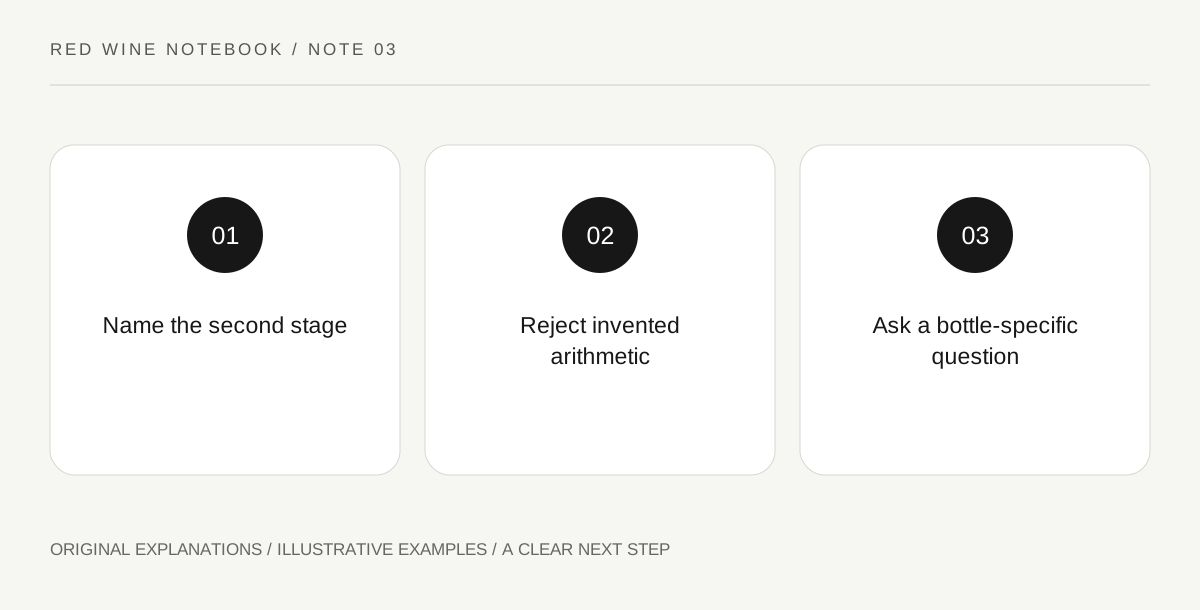
Original explanatory diagram. Read the full method and limitations below.
Identify the named process
The consortium describes Valpolicella Ripasso through refermentation of a base wine on material remaining from Amarone and Recioto production. The key editorial distinction is an additional production stage, not a claim that the finished bottle contains a fixed percentage of those two finished wines. Write a short process arrow on paper. Keep it at that level unless a reliable producer sheet provides more detail for the actual bottle you are considering.
Avoid the inexpensive-copy shortcut
A retailer may describe Ripasso through a comparison with Amarone, but a shorthand analogy should not erase its own identity. Ask what the specific wine offers and how the producer describes it. Price alone does not establish a production method or a guaranteed sensory relationship. You can choose a bottle within your budget without calling it an imitation of another category. The aim is accurate information that supports an ordinary preference, not a hierarchy built from prestige.
Keep style and recipe separate
Read the actual body, sweetness and service descriptions without treating them as a formula. A broad consortium overview or a retailer's tasting note does not establish that every producer uses identical timing or that every vintage feels the same. If you want a less weighty or more fruit-led red, state that preference directly. Let the seller connect it with the bottle rather than asking the word Ripasso alone to guarantee the desired result.
Record an informative next question
Copy the full denomination and producer, then write the one feature you still need to clarify. Perhaps you need current serving guidance, a smaller available format or confirmation of the listed vintage. An optional later note can describe your experience, with context such as food and temperature attached. Do not reverse-engineer an imagined blend recipe from the taste. A good explanation knows the difference between the process established by a primary source and details that remain bottle-specific.
Illustrative worked example
Illustrative scenario: a customer assumes a Ripasso bottle is half Valpolicella and half finished Amarone. Reading the consortium's process description corrects the imagined arithmetic. They keep the full label identity and ask whether the actual wine suits their preference for a dry red with moderate perceived weight. The useful improvement is a better question, without claiming to reconstruct the winery's recipe.
Questions that come up
Can I calculate Ripasso from two bottles at home?
The term concerns a winery production method. Mixing finished wines at the table does not reproduce that process or establish the named category.
Does Ripasso guarantee the same taste as Amarone?
No such guarantee follows from the process connection. Compare the actual descriptions and choose according to your preference rather than expecting an identical result.
References and scope
These sources support the factual background. Examples and exercises are original illustrative teaching material. References do not imply endorsement.
- Valpolicella Consortium: Wines — The consortium distinguishes Valpolicella, Ripasso, Amarone and Recioto and describes appassimento and ripasso.