Banyuls: ask about maturation instead of expecting one red dessert style
A regional wine name can contain several colors and maturation approaches. Banyuls is a useful example of why a sweet-wine category still needs more detail. Begin with the actual style stated on the bottle, then ask how that description connects with the serving you are considering.
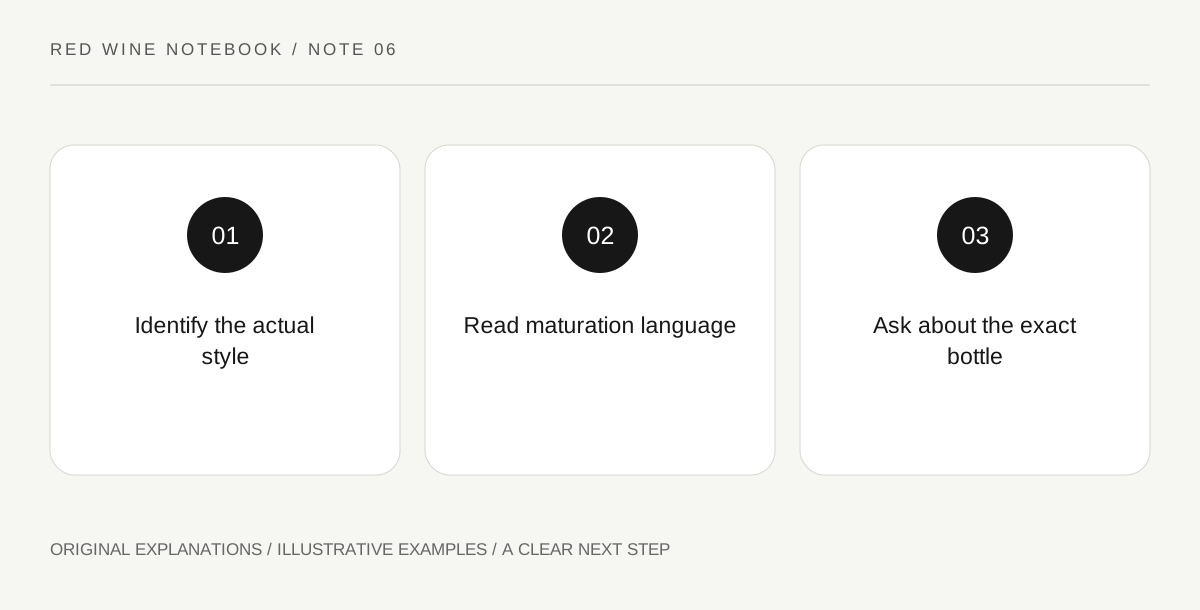
Original explanatory diagram. Read the full method and limitations below.
Keep appellation and color separate
INAO identifies Banyuls as a vin doux naturel and describes red, white, rose and amber expressions. The place name therefore does not independently establish that every bottle is red. This collection focuses on reading the red-derived styles, while leaving the broader category visible. Copy the actual product description rather than treating a photograph of one dark bottle as evidence about the entire appellation. A complete identity makes a retailer's answer more useful.
Look for the maturation description
INAO distinguishes red rimage styles protected from air during maturation from styles developed with air exposure. Keep that production information separate from your personal aroma associations. You do not need to memorize every possible mature aroma to understand that two Banyuls descriptions may emphasize different directions. Ask the producer or retailer about the specific bottle. Avoid equating controlled oxidative maturation at the winery with a forgotten opened bottle left exposed on a kitchen counter.
Choose the context before the prestige term
Decide whether the intended use is a small dessert serving, a gift for an adult who already enjoys the style or simply educational reading. Wine remains optional in each case. A particular regional name does not require a purchase or a tasting sequence. Ask about package size and producer service guidance if you do choose a bottle. Do not infer sweetness, alcohol or opening life from the word traditional alone; those questions need actual product information.
Write one bounded comparison
Compare two reliable producer descriptions and underline what differs: color, maturation language, stated year or service suggestion. Leave unknown details blank. If you later record a personal observation, distinguish fruit aroma, sweetness and texture rather than using rich to mean all three. The outcome should help explain which actual style interests you. It should not become a universal ranking in which one bottle proves that every Banyuls is either too sweet or exceptionally complex.
Illustrative worked example
Illustrative scenario: a shopper sees Banyuls rimage beside a more mature-style description and assumes the different colors show only a difference in age. Reading INAO's maturation distinction prompts a more precise question about the actual wines. The shopper compares the producer sheets before deciding, with no need to invent an exact age or flavor from appearance.
Questions that come up
Is every Banyuls a dark red wine?
INAO describes multiple colors and styles. Read the actual bottle rather than making the appellation name carry a color guarantee.
Can I make a traditional style by leaving a bottle open?
No. Controlled wine production and maturation are different from unmanaged storage after opening. Follow the producer's advice for the actual product.
References and scope
These sources support the factual background. Examples and exercises are original illustrative teaching material. References do not imply endorsement.
- INAO: Banyuls Traditionnel — Banyuls includes several colors and maturation styles; rimage and oxidative styles differ.