Drying tannin and mouthwatering acidity are different observations
A red wine can feel drying and mouthwatering in the same experience. Those words need not contradict each other. Separating tannin-related texture from acidity helps describe a preference more clearly, without forcing every unfamiliar sensation into the broad verdict that a wine is too dry.
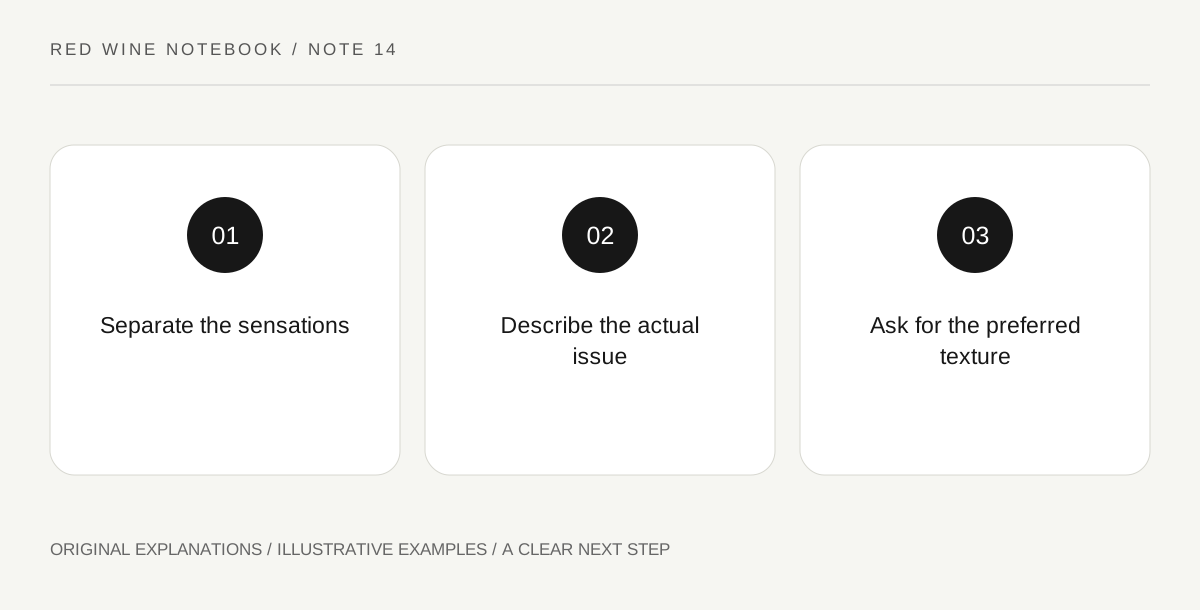
Original explanatory diagram. Read the full method and limitations below.
Use two sensory fields
WSET's introductory tasting guidance distinguishes acidity's mouthwatering effect from tannin's drying sensation. Write separate fields for those observations before reaching for a quality judgment. You do not need to assign professional scores or identify chemical amounts. Ordinary language such as noticeable mouthwatering and a drying grip can communicate the experience. Keep sweetness separate as well: a mouth-drying texture does not independently tell you whether the wine contains perceptible sugar.
Describe where the discomfort lies
If you dislike the serving, ask what specifically felt unpleasant. Was it a sour impression, a rough drying texture, alcohol warmth or an aroma you did not enjoy? A precise description makes a retailer's next suggestion more useful. There is no requirement to train yourself to like a sensation you dislike. Avoid repeated large sips to prove a category point, and do not use a tasting exercise as a reason to ignore irritation or another personal health concern.
Keep the context attached
Food, temperature and the particular serving can affect an impression. Record enough context to avoid treating one dinner as an isolated measurement of the wine's tannin or acidity. You can make a modest comparison across separate occasions without organizing a large drinking session. Do not modify the wine with acids, powders or other additives to create a home calibration experiment. The educational task is noticing and naming ordinary sensations, not altering a drink to simulate laboratory standards.
Turn the distinction into a request
A useful request might ask for a red with less drying grip while retaining a fresh impression. That is clearer than asking for something less dry when you actually mean tannin texture. Let the seller connect the request to actual options and budget. If a wine is not wanted, choose another beverage rather than treating red wine appreciation as a test of maturity. Your note can remain personal and practical without declaring the bottle objectively flawed.
Illustrative worked example
Illustrative scenario: an adult says a red is too dry but explains that the unwanted sensation is a rough grip on the gums rather than lack of sweetness. Their next retail question asks for a less drying texture, keeping sweetness as a separate preference. The improved vocabulary helps identify a suitable style or a different beverage without requiring a new numerical tasting score.
Questions that come up
Does dry always mean mouth-drying?
In wine descriptions, dry commonly concerns sweetness, while tannin can create a drying texture. State which meaning you intend so the conversation remains clear.
Must I learn to enjoy strong tannin?
No. Understanding the term can help choose what you prefer, but wine is optional and a personal dislike does not need to be corrected.
References and scope
These sources support the factual background. Examples and exercises are original illustrative teaching material. References do not imply endorsement.
- WSET: Building Wine Tasting Skills — Acidity and tannin are distinguishable sensory components; tasting notes can separate observations.
- WSET: What Is Wine? — Wine composition and sensory vocabulary, including aroma resemblance and drying tannin.