Audit a bottle location before planning years of red-wine storage
Long-term storage is a decision about both the wine and the place it will stay. Begin by asking whether the actual bottle is intended to develop further, then inspect the proposed location. A decorative rack can look convincing while sitting in unsuitable heat, light or daily disturbance.
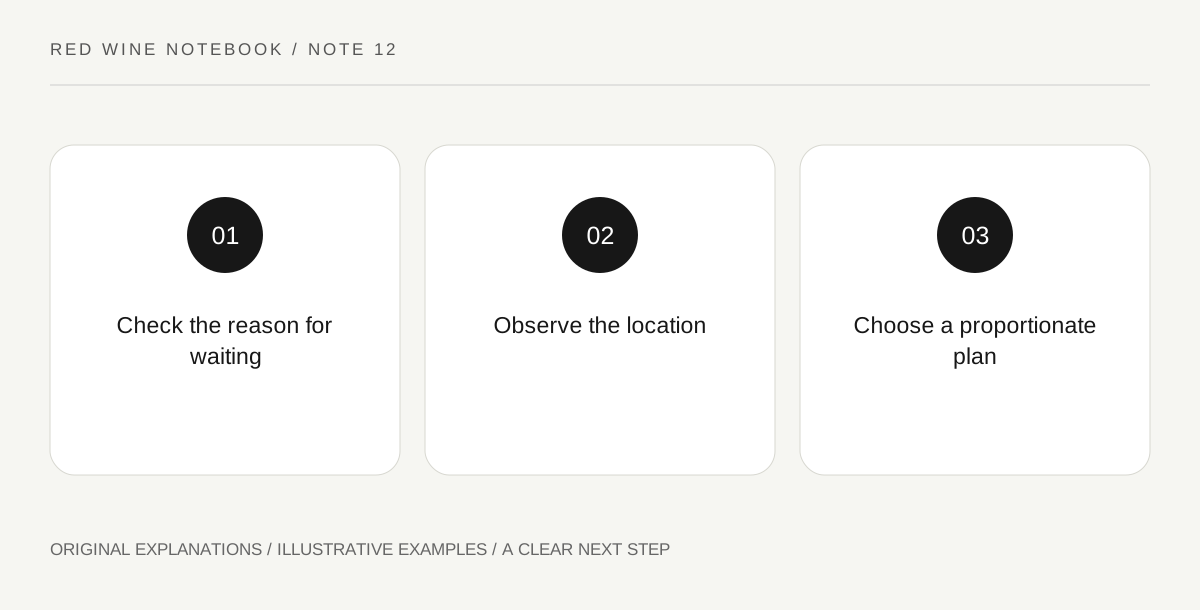
Original explanatory diagram. Read the full method and limitations below.
Ask whether waiting serves this wine
WSET emphasizes that most wine is intended for relatively early enjoyment rather than automatic improvement over years. Read the producer's guidance for the bottle and vintage before creating a long horizon. A famous region, heavy bottle or higher price does not independently establish ageing potential. If no reliable development advice is available, do not invent a distant ideal date. The first useful decision may be choosing a wine appropriate to the storage conditions you already have.
Map the location through an ordinary day
Note sunlight, nearby cooking or heating, and changes associated with household routines. WSET's storage guidance favors cool, stable conditions and protection from strong light. A shelf that feels cool once may warm considerably later. Observe the actual place rather than relying on a room's name. Do not put a rack beside an oven simply because the kitchen has spare wall space, or assume a damp basement automatically supplies every desirable storage condition.
Consider closure and physical handling
Follow appropriate guidance for the actual closure and storage duration. Keep bottles secure against falls and avoid locations that require frequent moving to reach unrelated household items. A rack should support the bottle properly rather than balancing an unusual shape on unsuitable rails. Do not infer closure requirements from label prestige. If you are investing in long-term storage, seek reliable product and cellar advice that matches the actual collection rather than copying a decorative installation from a photograph.
Choose a proportionate solution
A small household need may be resolved by buying fewer bottles close to the intended occasion. A dedicated storage device should answer a real recurring requirement, including space, operating conditions and maintenance. Avoid purchasing a large collection merely to justify equipment already bought. Write the storage plan in plain terms: which bottles, why they are being kept and how the location meets relevant guidance. Unknown bottle history remains an uncertainty even after it reaches a carefully chosen shelf.
Illustrative worked example
Illustrative scenario: a shopper plans to save several everyday reds for five years on an attractive kitchen rack. Reading the producer guidance and observing the warm location changes the plan. They choose a smaller near-term purchase and leave long-term collecting for a time when both bottle selection and storage are appropriate. No claim is made that a new rack or refrigerator would guarantee investment value.
Questions that come up
Does every red improve if stored longer?
No. WSET distinguishes wines intended for early use from those capable of useful further development. Read the actual producer advice rather than treating age as an automatic upgrade.
Can attractive packaging prove a bottle is worth cellaring?
Packaging supplies presentation, not a reliable development forecast. Bottle identity, producer guidance and appropriate conditions matter more than weight, shape or decoration.
References and scope
These sources support the factual background. Examples and exercises are original illustrative teaching material. References do not imply endorsement.
- WSET: Serving Temperatures and Storage — Style-specific serving temperatures and cool stable storage conditions; not a guarantee for any bottle.
- WSET: Six Common Wine Myths — Most wine is intended for relatively early enjoyment rather than automatic long-term improvement.