A red-wine gift needs a recipient brief before a prestige story
A thoughtful wine gift begins by knowing that the adult recipient actually welcomes alcohol and what style they enjoy. Then consider opening, timing and storage. A famous name or impressive bottle weight cannot answer those practical questions on the recipient's behalf.
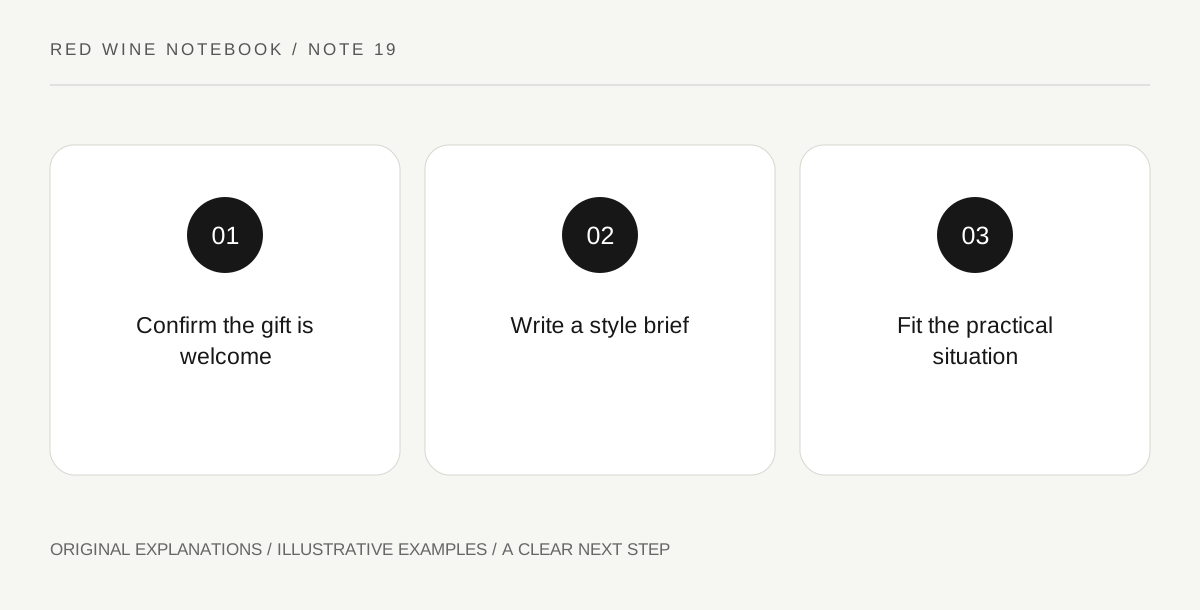
Original explanatory diagram. Read the full method and limitations below.
Confirm that wine is an appropriate gift
Use what the recipient has explicitly shared or ask plainly when suitable. Do not infer a drinking preference from age, profession or attendance at a dinner. If you do not know whether alcohol is welcome, another gift can be the better choice. The goal is consideration, not surprise at any cost. A wine-related interest may concern culture or collecting rather than wanting another bottle, so keep the actual person and occasion in view.
Write a short style brief
Record a known preference in clear terms: a particular style they enjoyed, dry rather than sweet, or a preference for less drying texture. Keep the budget explicit when asking a retailer for help. WSET's selection discussion emphasizes preferences and occasion rather than closure prestige. Avoid asking for the best red without defining what best means here. A shop can answer a bounded brief more usefully than a request built entirely around an expensive-looking label.
Fit the recipient's practical situation
Ask whether the bottle is intended for near-term use or longer keeping, and obtain reliable producer guidance if storage matters. Do not give a wine that requires special conditions while assuming the recipient has them. Consider whether the closure is easy to open with the equipment available and whether the format suits the intended use. A heavy package or large bottle can be an inconvenience even when it looks generous. Appropriate transport and temperature handling still matter.
Pass on facts without assigning homework
Include the correct wine identity and a concise producer service note if useful. Avoid a card insisting the bottle must be saved for a specific distant anniversary unless that plan is actually supported and wanted. The recipient can choose when, whether and with whom to use the gift. A story about region or producer can add interest, but do not invent scarcity, investment potential or health benefits to make the gift feel more significant.
Illustrative worked example
Illustrative scenario: a buyer plans to give a prestigious large red bottle to a friend who enjoys occasional small servings and lacks long-term storage. A better brief leads to an appropriate available format and a style the friend already likes, with clear producer information. The buyer also remains willing to choose another gift. Generosity is expressed through fit rather than bottle size.
Questions that come up
Does spending more guarantee a better gift?
No. A more expensive bottle can still conflict with the recipient's preferences or circumstances. Use the person's needs and a clear style brief.
Should I tell the recipient when they must drink it?
Provide relevant producer guidance where useful, while leaving the decision to them. A gift should not create pressure to consume or maintain a special storage project.
References and scope
These sources support the factual background. Examples and exercises are original illustrative teaching material. References do not imply endorsement.
- WSET: Finding a Wine You Like — Closure type alone does not rank wine quality; preferences, packaging and occasion inform choice.
- WSET: Six Common Wine Myths — Most wine is intended for relatively early enjoyment rather than automatic long-term improvement.