Pairing a red with dinner starts with the dish's components, not its title
A dish called chicken, noodles or vegetables can carry very different sauces, seasoning and textures. If adults choose wine with it, begin with those components rather than a rigid red-with-meat rule. Keep personal preference central and make room for a different beverage without treating the pairing as a test.
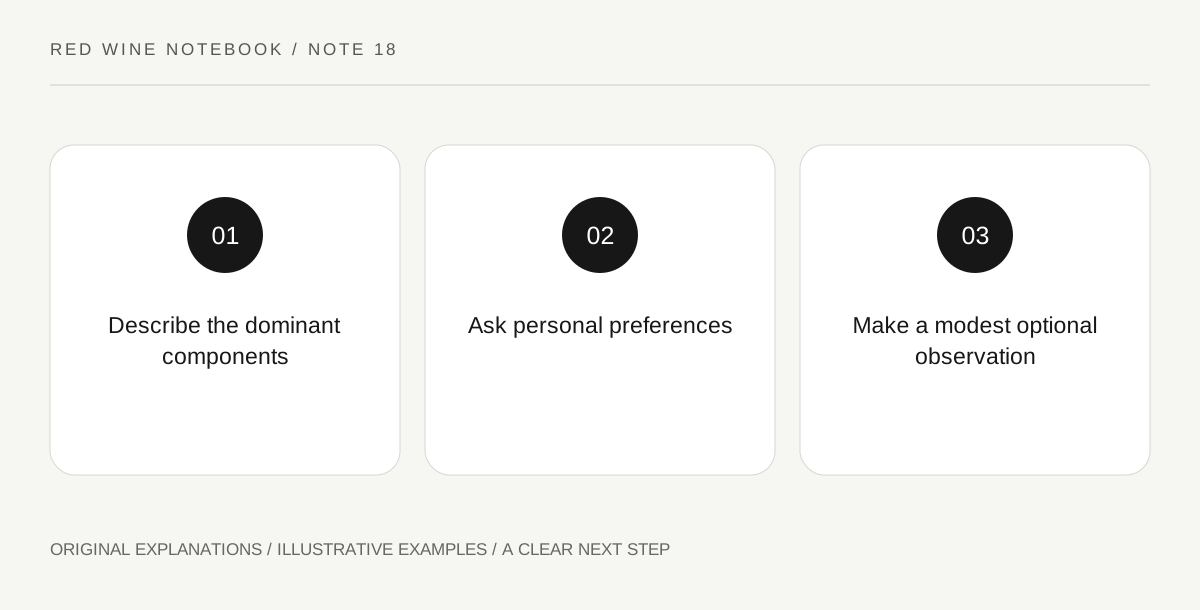
Original explanatory diagram. Read the full method and limitations below.
Describe what reaches the plate
Write the dominant sauce, sweetness, acidity, richness and heat in ordinary terms. A plain grilled ingredient and the same ingredient under a sweet spicy glaze present different questions. WSET's pairing guidance considers food components and wine structure rather than relying only on a dish name. You do not need to quantify every element. Identify the feature most likely to shape the experience and keep the rest as context.
State the wine preference independently
Ask what the people actually enjoy before assigning a bottle to the menu. A drying red that one person dislikes does not become compulsory because a pairing chart suggests it. Keep sweetness, tannin texture and perceived weight separate in the conversation. If the meal contains several dishes, there may be no single wine that matches everyone's priorities. Different drinks or a non-alcohol choice can be a more comfortable solution than forcing agreement around one bottle.
Use a small optional observation
An adult who already chooses a serving can notice the wine before and after an ordinary bite, without pouring extra quantities for an exercise. Describe whether the combination feels more or less appealing to you. Food can change the impression of sweetness, fruit and texture, but a home observation does not isolate every cause scientifically. Do not add salt, sugar or other ingredients to the wine itself to demonstrate a theory. The meal is the context, not a laboratory modification project.
Choose a useful adjustment
If the pairing is unpleasant, the next step may be another beverage, a different sauce choice or simply leaving the wine aside. Do not treat the meal as a reason to keep consuming an unwanted drink. A practical note identifies the actual combination and what you would change. It should not declare that every dish from an entire cuisine requires the same red. A specific observation about one sauce and wine is more useful than a sweeping cultural rule.
Illustrative worked example
Illustrative scenario: a host chooses a red based only on the word chicken. The actual dish includes a sweet hot sauce that changes the experience. Reviewing the dominant components and guests' preferences leads to several beverage options instead of one compulsory pairing. Any later note names the actual sauce and wine, leaving the conclusion personal rather than universal.
Questions that come up
Must red wine accompany red meat?
A rigid ingredient-color rule is not a complete pairing method. Consider the actual dish, wine style and personal preference, with alcohol remaining optional.
Can one successful pairing define a whole cuisine?
No. Preparation, sauce and ingredients vary widely. Keep the useful observation attached to the actual meal rather than generalizing from one dish.
References and scope
These sources support the factual background. Examples and exercises are original illustrative teaching material. References do not imply endorsement.
- WSET: Takeaway Food Pairing — Food components and wine structure can interact; personal preference is not a universal pairing rule.