Lambrusco: read sweetness and bubbles as separate style decisions
A sparkling red is not automatically a sweet red. Lambrusco offers a useful opportunity to separate color, sweetness and effervescence when reading a bottle or restaurant list. Start with the specific denomination and producer description rather than letting one familiar inexpensive bottle define the entire category.
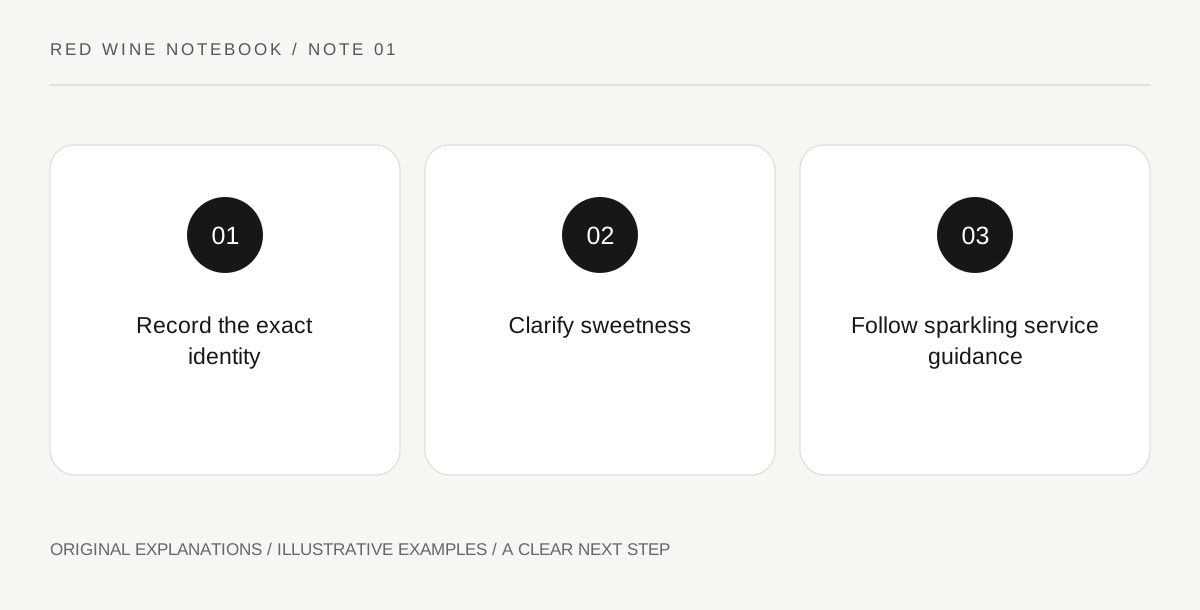
Original explanatory diagram. Read the full method and limitations below.
Keep the full wine identity
Copy the producer and full denomination, not only the large Lambrusco word. The consortium lists several denominations and styles rather than one identical product. A complete identity helps a retailer answer a specific question and makes a later preference note reproducible. Do not replace the actual information with a broad country stereotype. If a menu shortens the name, ask which bottle is being served before assuming it matches something you tried elsewhere.
Find the sweetness description
The consortium's denomination pages include dry through sweet styles. Look for the actual sweetness description on the bottle or producer sheet and ask when it is unclear. Fruit aroma, red color and bubbles do not independently establish residual sweetness. You can prefer a dry or a sweeter example without ranking the people who enjoy another style. A useful request states the desired sweetness plainly instead of asking for a serious version and hoping the seller interprets that code correctly.
Read the serving guidance for this bottle
Treat the wine as a sparkling product when handling its closure and follow producer instructions for temperature and opening. Do not shake the bottle or apply a still-wine opening method by habit. The style and packaging should be clear before service begins. If staff are serving it, ask about the expected experience rather than requesting a universal temperature from a general red-wine rule. A sparkling red need not follow the same service as a full-bodied still red.
Record the dimensions separately
An optional observation can name sweetness, bubble impression and body in separate phrases. Perhaps you enjoyed a dry finish but wanted gentler bubbles, or liked the fruit aroma without wanting a sweeter serving. Those details support a better next choice. You do not need to taste several bottles at once or finish an unwanted glass to learn the distinction. Keep consumption optional and your conclusion specific to the actual wine and setting.
Illustrative worked example
Illustrative scenario: an adult guest says they dislike Lambrusco because one earlier bottle was sweet. A retailer explains that the current options include a clearly described dry style. The guest may choose to explore it or decline. If they try it, the note records sweetness and bubbles independently, replacing a sweeping category judgment with a useful preference about the particular serving.
Questions that come up
Does a dark red color imply sweetness?
Color is not a sugar measurement. Use the actual style information and producer description, leaving unknown details unresolved rather than judging them from appearance.
Must every Lambrusco taste alike?
The consortium documents multiple denominations and styles. A single bottle can inform a personal preference, but it cannot establish the character of every wine in the category.
References and scope
These sources support the factual background. Examples and exercises are original illustrative teaching material. References do not imply endorsement.
- Consorzio Lambrusco: Denominations — Lambrusco denominations include different colors and sweetness styles; no single universal sweetness.