Fruit aroma does not settle how sweet a red wine is
Cherry, plum and berry language can make a red wine sound sugary even when its sweetness description says dry. Read aroma and sweetness as separate dimensions. That distinction supports a better shopping question without requiring precise laboratory values or pretending that everyone perceives the same balance.
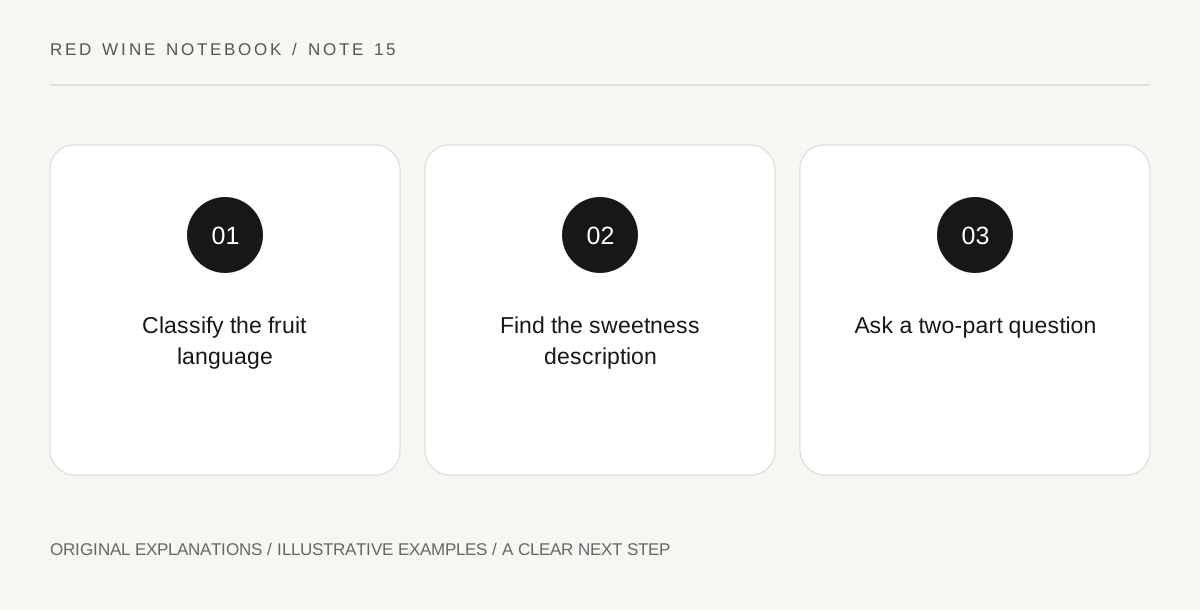
Original explanatory diagram. Read the full method and limitations below.
Identify the job of the fruit word
A fruit term in a tasting description is often an aromatic or flavor comparison. WSET explains that wine compounds can evoke other foods and plants. Put the word in an aroma field rather than automatically treating it as an added fruit ingredient or a sugar declaration. If the actual product is a flavored beverage or fruit wine, read its label accordingly. The descriptive function depends on context, so preserve the full phrase rather than extracting one attractive word.
Look for the separate sweetness statement
Read the producer's finished-style description and ask when sweetness is unclear. A fruit-led dry red and a distinctly sweet red can both use berry language. Do not estimate residual sugar from how ripe the aroma sounds. If a numerical dietary requirement matters, use reliable product information and appropriate advice instead of a tasting inference. For ordinary preference, a clear statement that you want perceptible sweetness or prefer a dry finish may be sufficient.
Keep intensity distinct from identity
Strong fruit aroma describes how prominent an impression is; the name of the fruit describes what it resembles. Neither independently measures sweetness. A useful optional note might say clear berry aroma with little perceived sweetness, or sweet-tasting with a quieter fruit impression. You do not have to agree with a producer's exact fruit list. Record the comparison you can actually explain rather than accumulating every descriptor associated with the grape or region.
Ask a two-part retail question
State both desired fruit character and sweetness. For example, ask whether the actual bottle is described as fruit-led and dry, then add a preference about drying texture if needed. This gives the seller meaningful dimensions rather than a vague request for fruity. Keep the conversation free from status language: wanting sweetness is a legitimate preference, not a mark of inexperience. Choosing a different beverage is also a complete outcome if no suitable wine fits the occasion.
Illustrative worked example
Illustrative scenario: a shopper wants a dry red but rejects a description mentioning ripe berries. Separating aroma from sweetness reveals that the producer still describes the wine as dry. The shopper asks about the actual style and chooses whether it sounds appealing. Their note keeps berry aroma, sweetness and tannin texture in separate boxes instead of allowing one fruit word to answer every question.
Questions that come up
Can a dry wine smell strongly of fruit?
Fruit aroma and sweetness are different dimensions. Use the actual description rather than assuming one cancels the other.
Does a fruit tasting note prove fruit juice was added?
It does not establish an ingredient by itself. Read the complete product identity and ingredient information where relevant instead of converting a sensory comparison into a recipe.
References and scope
These sources support the factual background. Examples and exercises are original illustrative teaching material. References do not imply endorsement.
- WSET: What Is Wine? — Wine composition and sensory vocabulary, including aroma resemblance and drying tannin.
- WSET: Building Wine Tasting Skills — Acidity and tannin are distinguishable sensory components; tasting notes can separate observations.