Room temperature for red wine should not mean wherever the bottle happens to stand
A heated kitchen and a cool dining room are both rooms, but they do not give a bottle the same serving condition. Replace a vague room-temperature instruction with the producer's style-specific guidance. Keep service temperature separate from long-term storage and avoid sudden heating as a shortcut.
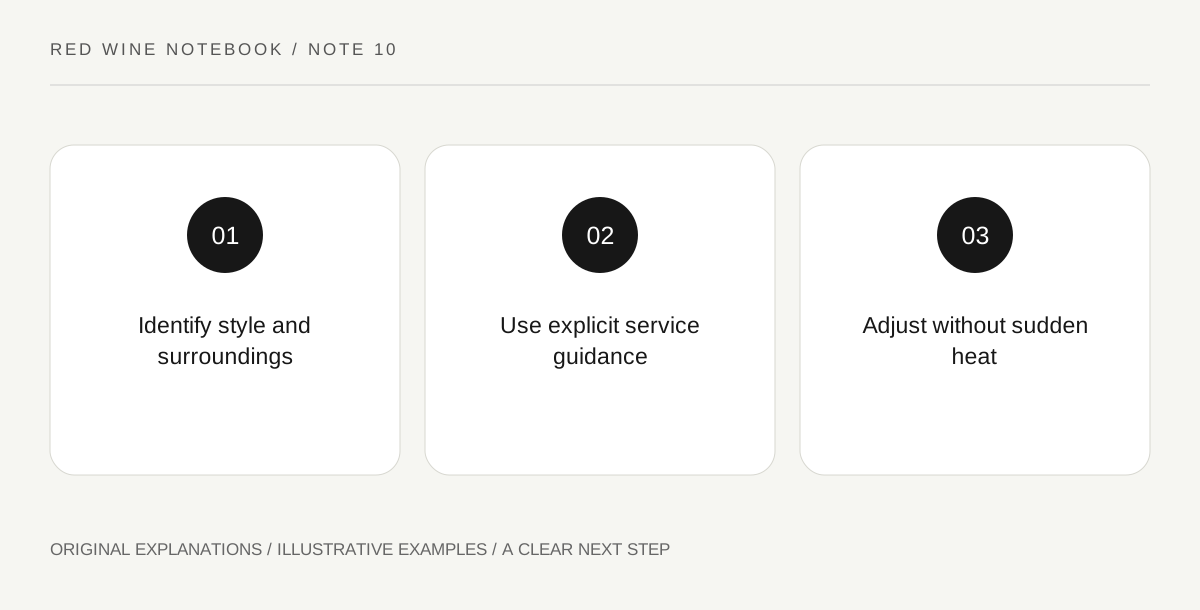
Original explanatory diagram. Read the full method and limitations below.
Identify the style and actual surroundings
WSET explains that familiar household room temperatures can be warmer than intended red-wine service. Begin with the specific wine style rather than one rule for every red, including sparkling and sweet examples. Notice where the bottle has been standing and whether nearby heat or sunlight affects it. A countertop location is not a measured serving instruction. If the producer supplies a range, keep it with the actual bottle identity instead of relying on a remembered phrase.
Distinguish comfort language from a number
Cool, cellar-like and room temperature can mean different things to different people. Ask for the actual service guidance when a precise target matters. Do not turn a touch impression into a calibrated measurement or claim that every guest perceives the same wine identically. The useful goal is a sensible serving condition that supports the style, not a technical performance in which the host must prove expert control over every degree.
Make adjustments gently and appropriately
Follow suitable producer or service guidance for changing temperature. WSET warns against rapid exposure to strong heat, such as a radiator. Do not use improvised heating or forget a bottle while trying to cool it quickly. Keep closures and sparkling products within their own handling instructions. A service adjustment should remain manageable and observed. If staff are serving the wine, explain the concern politely rather than attempting to alter the bottle's temperature yourself in an unsuitable setting.
Record temperature as context for preference
If an optional observation changes as a serving warms naturally, note that context without assuming the wine itself has changed permanently. A preference recorded in a very warm room may not apply under another condition. Keep aroma, perceived freshness and texture separate where possible. The lesson can improve the next serving without buying specialized equipment immediately. Choose storage or service tools only when there is a real recurring need, not because a vague phrase has created unnecessary anxiety.
Illustrative worked example
Illustrative scenario: a host leaves a red beside an operating oven because it should be served at room temperature. Reading the producer's guidance reveals that the location is inappropriate. They move the bottle to a suitable place and make a controlled adjustment using reliable service advice. Their future note names the intended range and location, replacing a misleading household phrase with a practical plan.
Questions that come up
Should every red be served at the same temperature?
No. Style-specific guidance matters, particularly across still, sparkling and sweet wines. Read the actual producer advice instead of imposing one number on all reds.
Is serving temperature the same as storage temperature?
They are different decisions with different time horizons. A suitable serving condition does not automatically establish the best arrangement for keeping a bottle for months or years.
References and scope
These sources support the factual background. Examples and exercises are original illustrative teaching material. References do not imply endorsement.
- WSET: Serving Temperatures and Storage — Style-specific serving temperatures and cool stable storage conditions; not a guarantee for any bottle.