Keep a red-wine preference note that can survive a different menu
A list of numerical ratings can be less useful than one clear sentence about what you enjoyed. Build a small preference note around identity, context and a specific observation. It should help with a later menu without requiring frequent tasting, specialist language or a public claim of expertise.
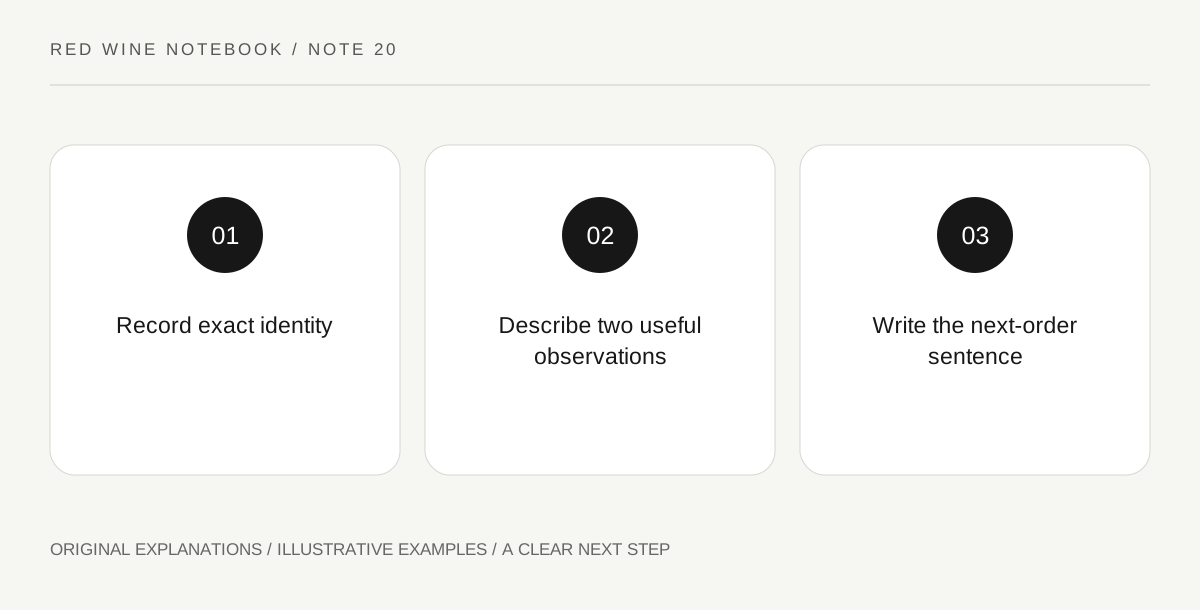
Original explanatory diagram. Read the full method and limitations below.
Preserve the actual identity
Record the producer, complete wine name and vintage where known, plus the venue or source. A photograph can help identification if permitted, but a legible text note is easier to search later. Do not use a shelf label for a different vintage as though it described the glass received. If the exact identity remains unknown, say so. An incomplete but honest note is more reliable than a confident entry filled with assumptions.
Choose two observations you can explain
WSET's introductory tasting guidance separates structural sensations and encourages careful description. Use ordinary words that mean something to you, such as noticeable mouthwatering and a softer drying texture than expected. Keep aroma, sweetness and texture distinct where possible. Do not copy a professional note wholesale or collect every imaginable fruit descriptor. A short observation you understand can guide a conversation better than an elaborate vocabulary you cannot connect to the experience.
Attach the important context
Note whether the wine was served with a strongly flavored dish, unusually warm or in a sparkling or sweet format you were not expecting. Those details can explain why the same broad style might feel different elsewhere. A personal note is not a controlled product test, so avoid causal certainty. You do not need to order another glass to check the conclusion. Learning can occur across occasional chosen experiences, and stopping or declining alcohol is always compatible with keeping a useful record.
Turn the record into a request
Finish with what you would seek or avoid next time. You might ask for a similarly fresh impression with less drying grip, or a sweet style in an appropriate small format. Bring that sentence to a retailer rather than demanding an unavailable bottle be reproduced exactly. Price, region and closure can remain useful facts without dominating the preference. Review only when the note serves a real decision; it need not become homework attached to every meal.
Illustrative worked example
Illustrative scenario: a learner gives one red a high score but later cannot explain why. They revise the record to include the exact identity, the meal and a preference for the wine's fresh impression with gentle drying texture. At another venue, that sentence helps staff suggest an appropriate available option. The note works even when the original bottle is absent.
Questions that come up
Do I need a hundred-point scale?
No. A concise personal description can be more useful for ordinary selection. A score is optional and does not replace the reasons behind a preference.
Should I keep tasting until I identify every aroma?
There is no requirement to do so. Keep observations modest and consumption optional; uncertainty can remain in the note without making it a failed exercise.
References and scope
These sources support the factual background. Examples and exercises are original illustrative teaching material. References do not imply endorsement.
- WSET: Building Wine Tasting Skills — Acidity and tannin are distinguishable sensory components; tasting notes can separate observations.
- WSET: Finding a Wine You Like — Closure type alone does not rank wine quality; preferences, packaging and occasion inform choice.