Read an alcohol percentage as concentration rather than a flavor score
The alcohol-content statement supplies a different kind of information from tasting language. Read it as a concentration by volume, keeping bottle size and served amount separate. The exercise explains the label without turning a numerical statement into a health recommendation or assuming taste can verify it.
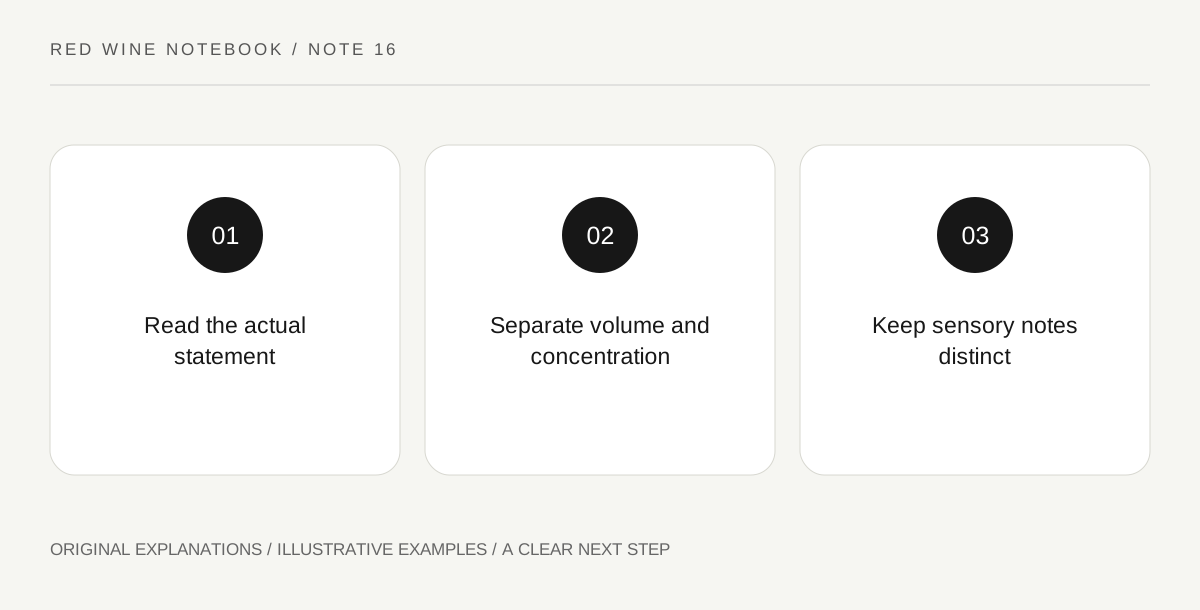
Original explanatory diagram. Read the full method and limitations below.
Locate the actual statement
TTB explains that a numerical alcohol-content statement on a wine label refers to percentage alcohol by volume. Look at the actual bottle rather than an old retailer thumbnail or a different vintage's description. Keep the percentage and the product identity together in your notes. US labeling guidance also allows tolerances under specified rules, so avoid treating the printed number as a laboratory result you personally measured. This guide does not reproduce the full legal compliance framework.
Separate concentration from package size
A percentage and a bottle volume are different fields. A larger package with the same percentage contains more liquid, but it is not a stronger concentration merely because it is larger. Likewise, a smaller serving does not change the wine's percentage. These distinctions are basic label arithmetic, not a recommendation for how much anyone should consume. Read the actual serving format when comparing a restaurant glass, a small bottle and a full-sized bottle.
Do not use flavor as a measuring instrument
Alcohol can contribute to a sensory impression, but sweetness, temperature, tannin and other features also influence how a wine feels. A smooth or light impression does not establish a low percentage. A warming sensation does not let you reverse-engineer the exact number. Use the label and reliable producer information for the factual statement, leaving your sensory note in a separate field. A mismatch with expectation is a reason to ask a question, not accuse a producer from taste alone.
Keep decisions personal and appropriately informed
The label can help compare actual products or understand a serving, while individual health questions require suitable guidance beyond this article. No percentage makes alcohol necessary or supplies a universal safe amount. If you are choosing a lower- or no-alcohol option, read the actual product category and statement rather than assuming a marketing adjective provides a zero value. You can decline alcohol without completing a comparison or explaining a personal reason to the group.
Illustrative worked example
Illustrative scenario: a diner sees the same stated percentage on a small bottle and a larger bottle and calls the larger one stronger. Separating concentration from package volume corrects the statement. The diner then checks the actual served quantity and chooses the format they want, or another beverage. The exercise supplies label understanding without inventing a personal drinking limit.
Questions that come up
Can a smooth taste prove low alcohol?
No. Sensory smoothness is influenced by several features and is not an alcohol measurement. Read the actual product statement.
Is the printed percentage a personal health recommendation?
No. It describes the product within its labeling context. Individual questions about alcohol need appropriate guidance, and choosing no alcohol remains a complete option.
References and scope
These sources support the factual background. Examples and exercises are original illustrative teaching material. References do not imply endorsement.
- TTB: Wine Label Alcohol Content — Alcohol content is expressed by volume; US label tolerances exist. No full legal compliance advice.
- WSET: Building Wine Tasting Skills — Acidity and tannin are distinguishable sensory components; tasting notes can separate observations.